
Start your EVOTECH request in under a minute.

Data Cabling Cinco Ranch TX
Professional, reliable installation for homes and businesses across Katy, Houston, and the surrounding areas — clean workmanship, clear communication, and a fast, free quote.
Why customers choose EVOTECH IT LLC
Customers are not only looking for a company name. They are looking for proof that the company can perform the exact work, is truly local, has real examples, and understands the technical details.
- Exactly what we do: Data Cabling Cinco Ranch TX — installed properly, tested, and done right.
- Local relevance: service area includes Katy, Houston, Sugar Land, Cypress, Richmond, Fulshear, Brookshire, and West Houston.
- Proof of work: real project photos, documented installations, and verifiable local reviews.
- Professional depth: testing, documentation, programming, calibration, and warranty-quality workmanship where it applies.
- Easy to reach: a clear phone number, quote form, and a real local business you can verify.
EVOTECH position
“Katy/Houston expert for low-voltage, network cabling, access control, cameras, AV, and business technology installation.”
Professional, insured, and business-ready installation standards
Clean workmanship, labeled installation, and final testing on applicable systems
Real project photos and visual proof
Recent EVOTECH IT LLC installations from around the Katy and Houston area.
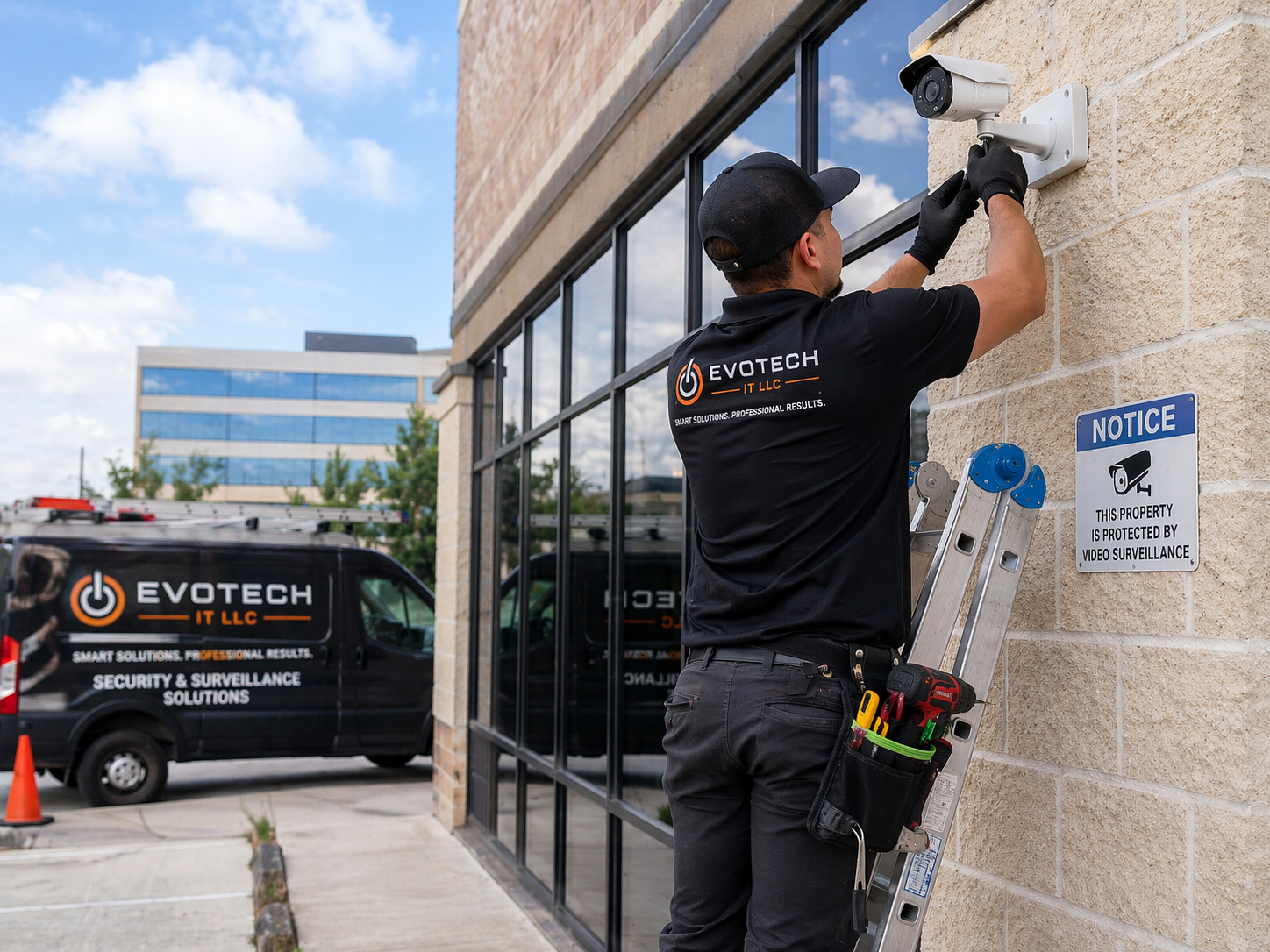

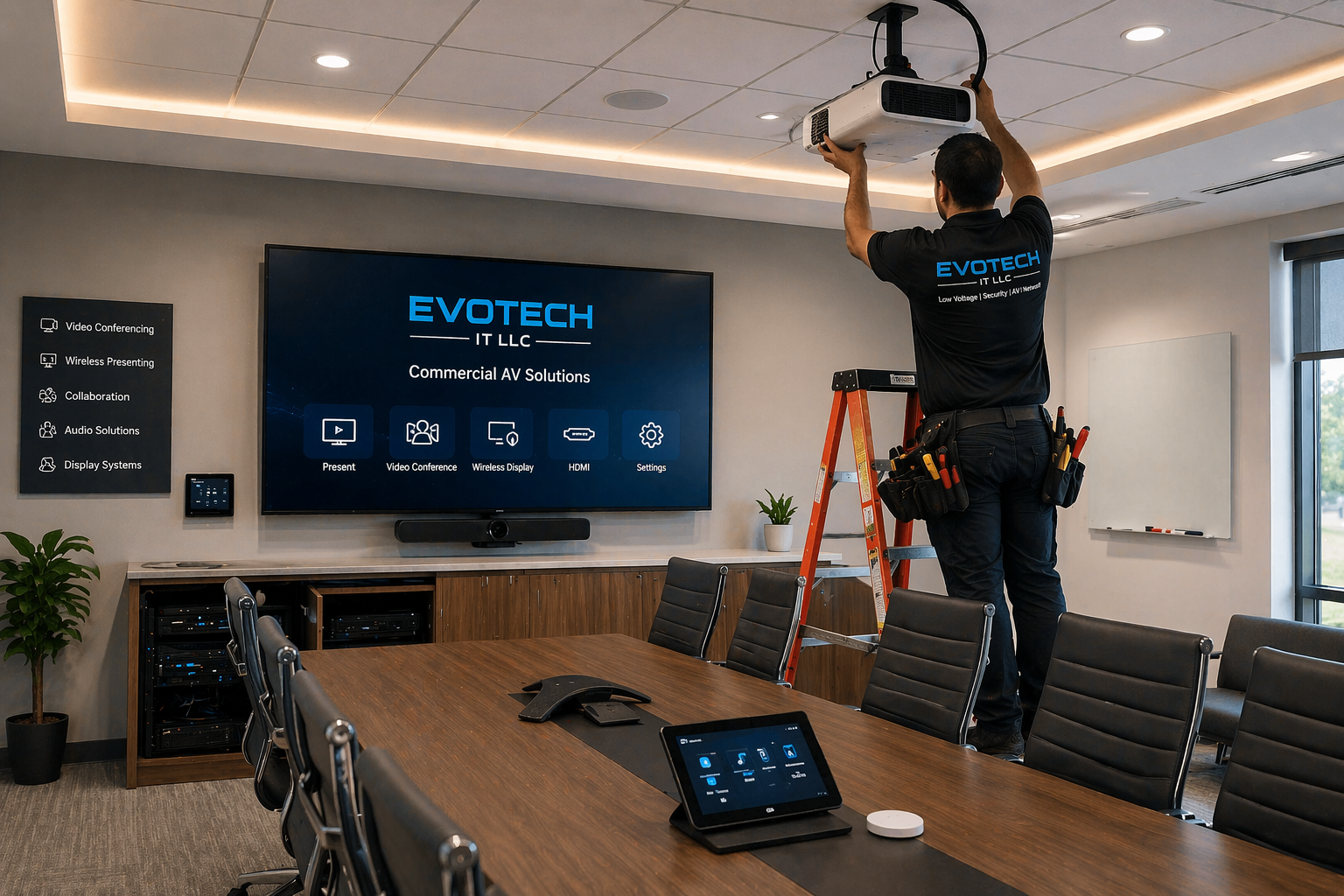

Professional scope for network cabling
- Cat6/Cat6A cable planning and clean routing
- Wall plates, keystones, patch panel termination, and rack organization
- Labeling, cable management, and pass/fail testing when applicable
- Network closet cleanup and business-ready documentation
Core EVOTECH services
- Network cabling services
- Network cable installation
- Network cable installer
- Structured cabling installation
- Structured cabling services
- Structured network cabling
- Commercial structured cabling
- Business structured cabling
- Office structured cabling
- Cat6 cabling
- Cat6 cable installation
- Cat6 installer
- Cat6A cabling
- Cat6A cable installation
- Ethernet wiring
- Ethernet cable installation
- Ethernet installer
- Data cabling
- Data cable installation
- Data drop installation
- Network drop installation
- Cat6 data drops
- Ethernet data drops
- Office data drops
- Business data drops
- Commercial data drops
- Network jack installation
- Data jack installation
- Ethernet wall jack installation
- Network outlet installation
- Data outlet installation
- RJ45 termination
- RJ45 jack termination
- Keystone jack installation
- Wall plate installation
- Patch panel installation
- Patch panel termination
- Patch panel labeling
- Patch panel cleanup
- Network rack wiring
- Network rack installation
- Network rack cleanup
- Server room cabling
- Server rack cabling
- IT closet cabling
- Network closet cabling
- MDF cabling
- IDF cabling
- MDF cleanup
- IDF cleanup
- Cable management
- Clean cable routing
- Low voltage network cabling
- Low voltage data wiring
- Commercial low voltage cabling
- Office low voltage wiring
- Business low voltage wiring
- Plenum cable installation
- Riser cable installation
- In-wall Ethernet wiring
- Ceiling Ethernet wiring
- Attic Ethernet wiring
- Conduit network cabling
- J-hook cabling
- Cable tray installation
- Network cable pathway planning
- Network cable testing
- Cat6 cable testing
- Ethernet cable testing
- Data cable testing
- Network cable certification
- Cat6 cable certification
- Cable tracing
- Network cable tracing
- Tone and test data cables
- Label and test data cables
- Bad cable replacement
- Old cable replacement
- Network cabling troubleshooting
- Ethernet troubleshooting
- Data jack repair
- Network jack repair
- Ethernet cable repair
- Network cable repair
- Network wiring repair
- Network cabling upgrade
- Cat6 upgrade
- Cat6A upgrade
- Office network upgrade
- Business network upgrade
- Commercial network upgrade
- Office buildout cabling
- Tenant improvement cabling
- New office network cabling
- Office remodel network wiring
- Commercial buildout cabling
- Retail network cabling
- Restaurant network cabling
- Medical office network cabling
- Dental office network cabling
- Clinic network cabling
- Law office network cabling
- Accounting office network cabling
- Real estate office network cabling
- Church network cabling
- School network cabling
- Daycare network cabling
- Warehouse network cabling
- Industrial network cabling
- Manufacturing network cabling
- Auto shop network cabling
- Storage facility network cabling
- POS network cabling
- Point of sale cabling
- Credit card terminal cabling
- Cash register network cabling
- Retail data cabling
- Restaurant POS cabling
- Conference room network cabling
- Boardroom network cabling
- Meeting room network cabling
- Conference table data cabling
- AV network cabling
- Commercial AV cabling
- Projector network cabling
- Smart TV Ethernet wiring
- Home office Ethernet wiring
- Gaming room Ethernet wiring
- Media room network cabling
- Home theater Ethernet wiring
- Smart home network wiring
- Residential Ethernet wiring
- Whole home network cabling
- Home network upgrade
- WiFi access point cabling
- Wireless access point wiring
- Access point cable installation
- Ceiling access point cabling
- Ubiquiti access point cabling
- UniFi access point cabling
- Business WiFi cabling
- Office WiFi access point cabling
- Commercial WiFi cabling
- PoE access point cabling
- Security camera network cabling
- Security camera Cat6 cabling
- IP camera network cabling
- PoE camera cabling
- NVR network cabling
- Camera cable installation
- Access control network cabling
- Door reader cabling
- Card reader network cabling
- Keypad door access cabling
- Door entry network cabling
- Intercom network cabling
- Business phone cabling
- VoIP phone cabling
- IP phone cabling
- Office phone cabling
- Phone data cabling
- VoIP network cabling
- Telephone data cabling
- Fiber optic cabling
- Fiber optic installation
- Fiber cable installation
- Fiber cable installer
- Fiber patch panel installation
- Fiber termination coordination
- Network documentation
- Cable labeling
- As-built cabling documentation
- Final network cable testing
- Customer handoff and walkthrough
What to look for when hiring an installer
Business identity
Real local service area, real phone number, real website, business email/domain, and clear company name.
Proof of work
Real photos, before-and-after examples, and a real project portfolio.
Reputation
Google reviews, recent customer feedback, and verified local business profiles.
Professional process
Testing, certification, programming, calibration, documentation, labeling, and final walkthrough when applicable.
Safety and risk
Licensed and insured, with a clear warranty, quality workmanship, and a code-aware approach.
Fast response
A clear call button, text/quote form, email, and direct contact for urgent installs.
Find & verify EVOTECH IT LLC online
These links help visitors verify the business across places where consumers commonly check before hiring a contractor, installer, or service provider.
Company trust links
Manufacturers & platforms we work with
What separates a real pro from a handyman?
- They speak in trade-specific terms and explain the installation path clearly.
- They document the scope, parts, wiring, equipment, programming, and handoff.
- They test, label, calibrate, or verify the system before calling the job complete.
- They show real proof: reviews, project photos, local listings, and direct contact information.
Questions to ask before hiring
- Do you handle the full installation or only part of it?
- Do you provide testing, certification, calibration, or final walkthrough?
- Can you show real photos of similar work?
- Do you provide an onsite quote and written scope?
Request a quote for Data Cabling Cinco Ranch TX
Tell EVOTECH what you need installed, how many drops, doors, cameras, rooms, TVs, phones, or access points, and whether this is residential or commercial.
FAQ
What is included in professional network cabling services?
Professional network cabling services include the planning, installation, termination, labeling, testing, cleanup, and documentation needed to create a reliable wired network for a home, office, retail store, warehouse, medical office, restaurant, school, church, or commercial building. A professional network cable installer does much more than run a wire through a wall. A complete network cable installation should be designed around the customer’s internet service, network equipment, office layout, device locations, WiFi access point needs, phone system needs, security camera needs, access control needs, and future expansion. For customers in Katy TX, Houston TX, Cypress TX, Sugar Land TX, Richmond TX, Fulshear TX, Brookshire TX, Cinco Ranch TX, Memorial Houston TX, and Energy Corridor Houston TX, network cabling services may include structured cabling installation, Cat6 cabling, Cat6A cabling, Ethernet wiring, data cabling, data drop installation, network drop installation, network jack installation, RJ45 termination, patch panel installation, network rack wiring, server room cabling, IT closet cabling, MDF cabling, IDF cabling, WiFi access point cabling, fiber optic cabling coordination, and cable testing. The goal is to create a clean and dependable technology infrastructure that supports computers, phones, printers, access points, cameras, AV systems, POS systems, and business equipment. A professional structured cabling project usually starts with a site review. The installer should identify where the internet comes into the building, where the modem or router is located, where the network switch will be installed, where the patch panel should go, where the server rack or wall rack should be mounted, and where each data cable needs to terminate. In an office network cabling project, this may include desks, cubicles, conference rooms, reception areas, printers, access points, phones, cameras, access control doors, and network closets. In a commercial network cabling project, this may include POS terminals, cash registers, warehouse stations, loading docks, security monitors, digital signage, and staff workstations. Cat6 cabling and Cat6A cabling are common choices for modern network cable installation because they support strong Ethernet performance when installed correctly. Cat6 cable installation is often used for office data drops, home office Ethernet wiring, business network cabling, WiFi access point cabling, security camera Cat6 cabling, VoIP phone cabling, and smart TV Ethernet wiring. Cat6A cable installation may be recommended when the customer wants higher performance, longer-term upgrade potential, or stronger support for high-speed network environments. The right cable choice depends on the building, budget, network speed goals, and device needs. Data drop installation is one of the most requested network cabling services. A data drop is a network cable run from the network closet, server room, MDF, IDF, or rack location to a wall jack, ceiling device, desk, office, access point, camera, phone, printer, or other endpoint. A professional data cable installation should include clean cable routing, proper cable support, wall plate installation, keystone jack termination, RJ45 termination, patch panel termination, labeling, and testing. When done correctly, the customer gets a clean Ethernet wall jack or network outlet that can be patched into the network switch. Patch panel installation is another important part of structured cabling. Instead of having loose cables hanging in the network closet, a professional installer terminates network cables into a patch panel inside a rack or wall-mounted enclosure. Patch panel termination, patch panel labeling, patch panel cleanup, network rack wiring, and cable management make the system easier to maintain. A clean patch panel helps identify which cable goes to which office, room, wall jack, access point, camera, or device. This is especially important for businesses that may need future troubleshooting or expansion. Server room cabling and IT closet cabling require careful organization. Network closet cabling, MDF cabling, IDF cabling, server rack cabling, rack cleanup, patch panel cleanup, and cable management all affect reliability and serviceability. A messy network closet can cause confusion, accidental disconnections, poor airflow, and difficult troubleshooting. A clean network rack with labeled cables, organized patch cords, proper cable routing, and clear separation between equipment makes the system look professional and work better. Network cabling services can also support other EVOTECH IT LLC service categories. Security camera network cabling, PoE camera cabling, NVR network cabling, access control network cabling, door reader cabling, intercom network cabling, VoIP phone cabling, business phone cabling, conference room network cabling, AV network cabling, and WiFi access point cabling all depend on good low-voltage network infrastructure. A strong wired network becomes the backbone for cameras, phones, access points, smart TVs, projectors, digital signage, card readers, and business systems. WiFi access point cabling is important because strong WiFi usually depends on a strong wired backhaul. A wireless access point still needs cable, power, and correct placement. Access point cable installation, ceiling access point cabling, UniFi access point cabling, Ubiquiti access point cabling, business WiFi cabling, office WiFi cabling, and commercial WiFi cabling help extend wireless coverage through offices, warehouses, restaurants, clinics, churches, schools, and homes. Poor WiFi is often caused by poor access point placement or lack of proper cabling. Professional network cable testing is the final step. The installer should test the cables, verify terminations, label the cables, check jacks, confirm patch panel locations, and make sure the customer understands the installation. Network cable testing, Cat6 cable testing, data cable testing, cable tracing, tone and test data cables, and final handoff help prevent future problems. EVOTECH IT LLC provides network cabling services, structured cabling, Cat6 cable installation, Ethernet wiring, data drops, patch panels, IT closet cabling, WiFi access point cabling, and low-voltage network wiring for homes and businesses that need a clean, reliable, and professional installation.
How do I know if my business needs Cat6 cabling, Cat6A cabling, or structured cabling?
A business may need Cat6 cabling, Cat6A cabling, or a full structured cabling installation depending on the size of the office, the number of network devices, the speed requirements, the equipment being used, the building layout, and the customer’s future growth plans. Many customers search for Cat6 installer, Cat6 cable installation, Ethernet wiring, data cabling, network drop installation, office network cabling, business network cabling, and structured cabling services because they need a stronger wired network than WiFi alone can provide. A professional network cable installer can help determine whether the job is a simple data drop project or a larger structured cabling project. Cat6 cabling is a strong choice for many homes and businesses. Cat6 cable installation is commonly used for office desks, computers, printers, VoIP phones, WiFi access points, security cameras, smart TVs, conference room AV systems, POS terminals, credit card terminals, cash registers, and network-connected devices. If a business needs reliable Ethernet wiring for normal office work, internet access, phones, printers, and cameras, Cat6 cabling is often an excellent solution. Cat6 data drops, Ethernet data drops, RJ45 termination, keystone jack installation, and patch panel termination create a professional wired network. Cat6A cabling may be a better choice when the customer wants more upgrade potential or stronger support for high-speed networks. Cat6A cable installation is often used in larger offices, server rooms, high-performance work areas, enterprise-style environments, and situations where the customer wants longer-term cabling infrastructure. Cat6A is thicker and may require more planning for cable pathways, conduit, patch panels, and bend radius. A professional structured cabling installer can review whether Cat6A is necessary or whether Cat6 is enough for the project. Structured cabling is the organized system behind a professional network. Instead of running random cables one by one, structured cabling creates a planned network infrastructure. It may include Cat6 cabling, Cat6A cabling, data cabling, Ethernet wiring, patch panel installation, server room cabling, network rack wiring, MDF cabling, IDF cabling, fiber optic cabling coordination, WiFi access point cabling, security camera network cabling, VoIP phone cabling, access control cabling, and cable labeling. Structured cabling is especially important for offices, warehouses, retail stores, restaurants, medical offices, schools, churches, law offices, accounting offices, real estate offices, and commercial buildouts. A simple Cat6 data drop project may be enough when the customer only needs one or two new network jacks. For example, a home office may need Ethernet wiring to a desk. A small business may need a network drop for a printer. A restaurant may need a data cable for a POS station. A conference room may need Ethernet wiring for a display, projector, or video conferencing system. A security camera may need PoE camera cabling to the NVR. In these cases, data cable installation, RJ45 termination, wall plate installation, and cable testing may be enough. A full structured cabling project is better when the customer is building or remodeling an office, moving into a new suite, expanding a business, upgrading a network closet, adding multiple workstations, installing WiFi access points, adding cameras, adding business phones, or creating a professional IT closet. Office buildout cabling, tenant improvement cabling, commercial buildout cabling, new office network cabling, office remodel network wiring, and business network upgrade projects should usually be planned as structured cabling rather than random cable runs. The decision also depends on what systems the cabling must support. Business phone cabling and VoIP phone cabling may require data drops at every desk. Security camera Cat6 cabling may require PoE cable runs to ceilings, exterior walls, warehouses, parking lots, and entrances. WiFi access point cabling may require ceiling-mounted cable runs to strategic locations. Access control network cabling may require cable to door readers, controllers, intercoms, or entry systems. Conference room network cabling may require cables for smart TVs, projectors, AV equipment, table boxes, and video conferencing systems. When multiple systems are involved, structured cabling makes everything cleaner and easier to manage. Network closets also influence the decision. If the customer has loose cables, unlabeled wires, old switches, messy patch cords, or no patch panel, then patch panel cleanup, network rack cleanup, IT closet cabling, server room cabling, network closet cabling, MDF cleanup, IDF cleanup, and cable management may be needed. A clean rack with labeled patch panels and organized cables helps IT support work faster and reduces mistakes. Testing and certification also matter. For critical business installations, network cable testing, Cat6 cable testing, data cable testing, network cable certification, cable tracing, label and test data cables, and final documentation may be needed. If a cable is not tested, the customer may not know whether the termination is correct or whether the cable will perform reliably. A professional Cat6 installer should not only run cable but also verify that it works properly. EVOTECH IT LLC can help customers decide between Cat6 cabling, Cat6A cabling, and structured cabling based on the building, budget, performance needs, and future expansion. For many homes and small businesses, Cat6 cable installation is a strong and cost-effective choice. For larger businesses or upgrade-focused environments, Cat6A cabling or structured cabling may be better. For new offices, commercial buildouts, network closets, WiFi access points, security cameras, VoIP phones, POS systems, and conference rooms, structured cabling provides the clean foundation that all other technology depends on.
Why is professional data cabling and network cable testing important?
Professional data cabling and network cable testing are important because a wired network is only as reliable as the cable installation behind it. A customer may have fast internet, a strong router, a good network switch, new computers, modern WiFi access points, VoIP phones, and security cameras, but if the network cabling is damaged, poorly terminated, mislabeled, or untested, the entire system can become unreliable. Professional network cabling services help prevent slow connections, random dropouts, failed devices, poor camera feeds, weak phone quality, bad data jacks, and future troubleshooting problems. Data cabling includes the physical low-voltage wiring that connects devices to the network. This may include Cat6 cabling, Cat6A cabling, Ethernet wiring, data cable installation, network drop installation, data drop installation, network jack installation, data jack installation, Ethernet wall jack installation, RJ45 termination, keystone jack installation, patch panel termination, and network rack wiring. Each cable should be routed, supported, terminated, labeled, and tested correctly. A wire that looks fine from the outside may still have a bad termination, split pair, damaged conductor, poor connection, or incorrect wiring pattern. Network cable testing helps verify that the cable is installed correctly. Basic network cable testing can confirm continuity and proper pinout. More advanced Cat6 cable testing or network cable certification can help verify performance. Cable tracing can identify where a cable begins and ends. Tone and test data cables help locate unlabeled wires in an office or network closet. Label and test data cables help clean up older systems where nobody knows which wall jack connects to which patch panel port. Without testing, the customer may not know if a cable will support the devices they plan to use. Professional testing is especially important for business network cabling. Offices depend on reliable Ethernet wiring for computers, printers, VoIP phones, conference room systems, WiFi access points, security cameras, POS terminals, credit card terminals, and cloud-based work. If a data drop fails, a desk may lose internet. If a VoIP phone cable is weak, calls may drop or sound bad. If PoE camera cabling is poor, cameras may disconnect or stop recording. If WiFi access point cabling is bad, wireless coverage may fail in that part of the building. If a POS network cable is unstable, checkout operations can be affected. Patch panel installation and labeling are also part of professional data cabling. A proper structured cabling system should not end in loose cables. Network cables should terminate neatly into a patch panel, and each port should be labeled. The patch panel should connect to the network switch using organized patch cords. Patch panel cleanup, network rack cleanup, server room cabling, IT closet cabling, MDF cabling, IDF cabling, and cable management make future troubleshooting easier. When cables are not labeled, a simple repair can take much longer than necessary. Professional cable routing affects reliability and safety. In-wall Ethernet wiring, ceiling Ethernet wiring, attic Ethernet wiring, conduit network cabling, J-hook cabling, cable tray installation, plenum cable installation, riser cable installation, and low voltage network cabling should be handled carefully. Cables should not be pinched, stretched, sharply bent, or run in unsafe ways. Poor cable routing can damage the cable or create future service problems. Commercial network cabling and office low voltage wiring should be planned to support the building layout and avoid unnecessary mess. Data cabling is also critical for WiFi. Many customers think WiFi is wireless, but strong business WiFi often depends on wired access points. WiFi access point cabling, wireless access point wiring, access point cable installation, ceiling access point cabling, UniFi access point cabling, Ubiquiti access point cabling, office WiFi cabling, business WiFi cabling, and commercial WiFi cabling all require proper Ethernet cable installation. A weak cable to an access point can create weak WiFi performance even if the access point itself is high quality. Security camera systems also rely on professional cabling. Security camera network cabling, IP camera network cabling, PoE camera cabling, NVR network cabling, and camera cable installation all need stable cable runs. A camera that disconnects because of a bad cable may stop recording exactly when the customer needs footage. Professional Cat6 cable installation and cable testing help ensure that cameras stay online and record properly. Access control and business phone systems also depend on cable quality. Door reader cabling, card reader network cabling, keypad door access cabling, door entry network cabling, intercom network cabling, business phone cabling, VoIP phone cabling, IP phone cabling, office phone cabling, and phone data cabling all rely on stable low-voltage wiring. Poor cabling can create access control failures, intercom problems, phone call issues, and service interruptions. Network cable testing also helps during upgrades. If a business has old cabling, unlabeled jacks, dead network ports, or confusing wiring, a professional installer can perform network cable tracing, data jack repair, network jack repair, Ethernet cable repair, old cable replacement, bad cable replacement, and network cabling troubleshooting. This can restore useful infrastructure without replacing everything unnecessarily. EVOTECH IT LLC provides data cabling, network cable installation, Cat6 cabling, Cat6A cabling, Ethernet wiring, data drops, patch panel installation, RJ45 termination, network cable testing, cable tracing, network closet cleanup, IT closet cabling, WiFi access point cabling, camera network cabling, business phone cabling, and low-voltage network wiring. Professional cabling and testing help the customer get a cleaner installation, stronger network reliability, easier troubleshooting, and better long-term technology performance.
What should I ask before hiring a network cable installer?
Before hiring a network cable installer, structured cabling contractor, Cat6 installer, Ethernet wiring technician, data cabling company, or low-voltage network cabling provider, you should ask questions that show whether the company understands planning, cable routing, termination, patch panels, testing, labeling, documentation, and future expansion. A professional network cabling company should not simply pull cable and leave. The installer should create a clean, reliable, testable, and organized network cabling system that supports the customer’s computers, phones, WiFi access points, security cameras, access control, AV systems, POS systems, and business equipment. The first question is whether the installer handles the exact type of network cabling service you need. Some customers need one data drop installation. Others need office network cabling, business network cabling, commercial network cabling, structured cabling services, Cat6 cable installation, Cat6A cabling, Ethernet wiring, server room cabling, IT closet cabling, patch panel installation, network rack cleanup, WiFi access point cabling, security camera network cabling, VoIP phone cabling, access control network cabling, POS network cabling, or fiber optic cabling. The company should be able to explain what service fits your project. The second question is how they plan the cable routes. A professional network cable installer should ask where the router, modem, network switch, patch panel, rack, server room, MDF, or IDF is located. They should ask where the new jacks, data drops, wall plates, access points, cameras, phones, POS terminals, printers, and workstations need to go. For office buildout cabling, tenant improvement cabling, commercial buildout cabling, new office network cabling, or office remodel network wiring, planning is critical. Poor planning can create messy cable paths, dead zones, difficult maintenance, and expensive rework. The third question is what type of cable they recommend. Cat6 cabling is common for many homes and businesses. Cat6A cabling may be better for higher-performance or future-ready installations. Fiber optic cabling may be needed for longer distances, building-to-building links, backbone connections, or certain commercial environments. The installer should explain the difference between Cat6 cable installation, Cat6A cable installation, Ethernet wiring, data cabling, low-voltage network cabling, plenum cable installation, riser cable installation, and fiber optic installation when relevant. The fourth question is whether they terminate cables professionally. Good network cabling includes RJ45 termination, keystone jack installation, network jack installation, data jack installation, wall plate installation, patch panel termination, and cable labeling. If the installer only leaves loose cables or does not label anything, the customer may have trouble later. Professional patch panel installation and patch panel labeling make the system easier to service, expand, and troubleshoot. The fifth question is whether network cable testing is included. A professional installer should test the cable after installation. Network cable testing, Cat6 cable testing, data cable testing, Ethernet cable testing, cable tracing, tone and test data cables, label and test data cables, and network cable certification help confirm that the cable is usable. Without testing, a cable may look installed but fail when connected to a computer, camera, phone, or access point. The sixth question is whether they can clean up or organize the network closet. Many businesses have messy IT closets with loose wires, tangled patch cords, unlabeled cables, old switches, and no clear layout. Server room cabling, IT closet cabling, network closet cabling, MDF cabling, IDF cabling, network rack wiring, patch panel cleanup, network rack cleanup, server rack cabling, cable management, MDF cleanup, and IDF cleanup can make the system easier to manage. A clean rack is one of the strongest signs of a professional cabling company. The seventh question is whether the installer understands other low-voltage systems. Network cabling often supports more than computers. WiFi access point cabling, security camera Cat6 cabling, IP camera network cabling, PoE camera cabling, NVR network cabling, access control network cabling, door reader cabling, intercom network cabling, business phone cabling, VoIP phone cabling, conference room network cabling, AV network cabling, and POS network cabling are all connected to the larger technology infrastructure. A company that understands low-voltage systems can plan better cable pathways and avoid conflicts between services. The eighth question is whether they work in your type of property. Network cabling for a medical office is different from network cabling for a warehouse. Restaurant network cabling is different from law office network cabling. Retail network cabling may need POS terminals, credit card terminals, cameras, and WiFi. School network cabling may need access points, classrooms, cameras, and offices. Warehouse network cabling may need long cable paths, elevated mounting, WiFi access points, and camera coverage. EVOTECH IT LLC can support office network cabling, commercial network cabling, residential Ethernet wiring, medical office network cabling, dental office network cabling, retail store network cabling, restaurant POS cabling, warehouse network cabling, church network cabling, school network cabling, and more. The ninth question is what happens if a cable fails later. A professional installer should be able to provide network cabling troubleshooting, Ethernet troubleshooting, data jack repair, network jack repair, Ethernet cable repair, bad cable replacement, old cable replacement, cable tracing, and system cleanup. The installer should also provide clear communication and a professional handoff. The tenth question is whether the company has real local proof. Look for a real business name, real phone number, real website, local service area, service pages, photos, reviews, contact options, and professional explanations. A network cable installer serving Katy TX, Houston TX, Cypress TX, Sugar Land TX, Richmond TX, Fulshear TX, Brookshire TX, Cinco Ranch TX, Memorial Houston TX, and Energy Corridor Houston TX should show clear local relevance and service detail. EVOTECH IT LLC provides network cabling services, structured cabling installation, Cat6 cabling, Cat6A cabling, Ethernet wiring, data drops, patch panel installation, server room cabling, IT closet cabling, WiFi access point cabling, security camera cabling, access control cabling, business phone cabling, POS cabling, network cable testing, cable tracing, and low-voltage network wiring. Before hiring a network cable installer, ask the right questions and choose a company that can deliver clean cable routing, strong terminations, labeled patch panels, reliable testing, and a professional final result.
Ready to make EVOTECH the obvious choice?
Katy/Houston expert for low-voltage, network cabling, access control, cameras, AV, and business technology installation.
Nearby areas & related services
Ready for EVOTECH to help?
Before you leave, send the quick version. We will review the page you came from and reply with the clean next step.